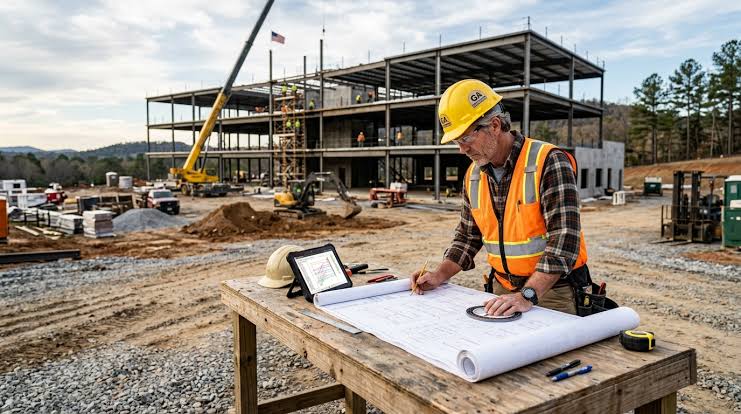
Construction Takeoff Services: What They Are and Why Accurate Quantities Win Bids
Before a contractor can price a job, they need to know exactly what the job contains. How many square feet of drywall? How many cubic yards of concrete? How many linear feet of pipe? The process of answering those questions is called a construction takeoff service, and everything else in a bid depends on it.
Get the takeoff right, and the estimate has a solid base. Get it wrong, and no amount of careful pricing can fix the result.
What Is a Construction Takeoff?
A construction takeoff, also called a quantity takeoff, is the process of measuring and counting every material and item shown on the drawings and described in the specifications. The estimator reads the plans, measures areas, lengths, and volumes, and records the quantities by trade and by item.
Those quantities then feed the cost estimate, where labor, equipment, and material prices are applied. In short, the takeoff answers “how much?” and the estimate answers “how much will it cost?”
What a Good Takeoff Includes
A thorough takeoff goes well beyond the big-ticket items. It typically covers:
- Major materials. Concrete, structural steel, lumber, drywall, masonry units, piping, and similar items that drive the budget.
- Minor materials and accessories. Fasteners, sealants, tape, anchors, and hardware. They look small, but they add up over a whole building.
- Waste and overage factors. Cutting, breakage, and installation loss that every trade experiences.
- Specification details. Grades, finishes, thicknesses, and manufacturer requirements that change the price of an item.
- Addenda and revisions. Changes issued after the first drawing set that can quietly alter quantities.
Why Manual Takeoffs Hold Contractors Back
Many contractors still do takeoffs by hand or between other tasks, and it shows. Manual counting is slow, and it’s easy to make mistakes when you’re measuring hundreds of items across dozens of sheets. A missed wall, a wrong scale, or a skipped detail can throw off a whole trade package.
Time is the other problem. A large takeoff can take days, and bid deadlines don’t move. Contractors who spend their evenings measuring plans often end up bidding fewer jobs, or rushing the ones they do bid.
How Takeoff Services Work
Professional takeoff services take this burden off your team. The process is straightforward:
- You send the plans. Share the drawing set, usually in PDF, along with the specifications and your scope of work.
- Estimators review the documents. They check for missing sheets, unclear details, and anything that needs clarification.
- Quantities are measured using takeoff software. Digital tools such as Bluebeam Revu and PlanSwift let estimators measure directly on the plans, which improves both speed and consistency.
- You receive an organized quantity report. Items are grouped by trade or CSI division, in a format you can use right away or send on to a full cost estimate.
Takeoff Only, or a Full Estimate?
Some contractors already have pricing from their suppliers and only need accurate quantities. Others want the whole package, with material, labor, and equipment costs included. A good provider will offer both options. If you’re unsure which you need, start with a takeoff for one trade and see how it fits your workflow.
Where Takeoff Accuracy Matters Most
Every trade benefits from careful quantities, but a few depend on them heavily:
- Concrete. Small errors in slab thickness or footing dimensions turn into large volume differences.
- Sitework. Cut and fill, paving, and utilities involve large quantities and tight margins.
- Drywall and finishes. Wall and ceiling areas, plus all the accessories, need a detailed count.
- MEP. Piping, conduit, ductwork, and fixtures involve long runs and many individual components.
Providers like BidWin Solutions cover these trades and more, working with general contractors, subcontractors, suppliers, and architects on residential and commercial projects.
Tips for Getting the Best Results From a Takeoff Service
- Send complete documents. The full drawing set and specifications prevent assumptions and back-and-forth.
- Define your scope clearly. Tell the estimator which trades and which areas of the project you need covered.
- Flag special requirements. Alternates, phasing, or owner-supplied materials all affect quantities.
- Share the bid date upfront. A realistic timeline helps the team plan and deliver on time.
- Review the output. Use the quantity report to spot-check anything that looks unusual before you price it.
Treat Estimating as Part of Business Growth
Outsourcing takeoffs is as much an operations decision as a technical one. It lets a small contracting firm handle more bids without adding permanent overhead, which is the same kind of lean scaling that founders and small business owners work toward in every industry. For more on how growing businesses manage costs and capacity, you can browse the business coverage at noodlemagazine, which regularly features stories on entrepreneurship and business trends.
Final Thoughts
Accurate takeoffs are where winning bids begin. When the quantities are right, your pricing is sturdier, your bids are cleaner, and you spend less time dealing with surprises once construction starts.
If your team is stretched thin or bid deadlines keep stacking up, a professional takeoff partner can give you accurate numbers and your time back. Send your next plan set to BidWin Solutions and see how much faster your bidding can be.