
Indie Hackers Are Building Smarter, Not Harder
Something interesting has happened to the profile of the person building software products independently over the last several years. The archetype of the solo technical founder, someone with deep engineering expertise grinding through nights and weekends to build a product that might find a market after months of development, has not disappeared, but it has been joined by a genuinely different kind of builder. This new category includes people with domain expertise in specific industries who are using AI-assisted tools to build software solutions to problems they understand intimately, people with marketing and distribution skills who are building simple products because the technical barrier no longer forces them to be technical first, and people who have identified underserved niches in existing software categories and are moving fast enough to capture them before larger competitors notice.
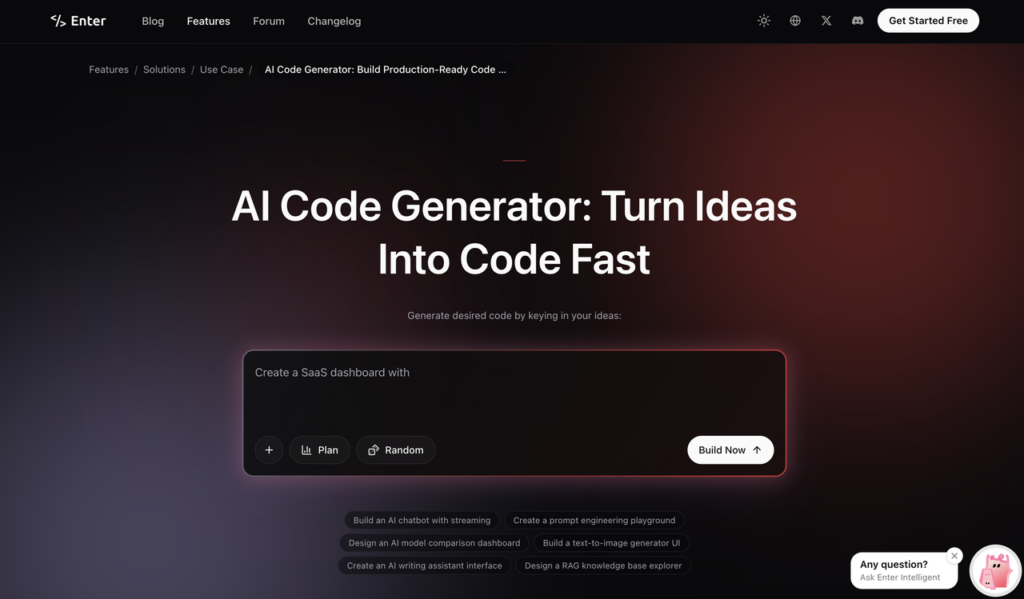
The indie hacker community has always been defined by resourcefulness and the willingness to build with whatever is available rather than waiting for ideal conditions. What has changed is what is available and how dramatically the ceiling on what a single person or tiny team can build and ship has risen. A code maker that handles implementation of clearly specified functionality compresses the time between an idea and a testable product in ways that change what is possible for someone building alone or with a very small team. Enter Pro has been genuinely useful for indie builders navigating this new landscape and understanding what the best of them are doing differently is worth the attention of anyone building independently.
The Niche Software Opportunity That Big Companies Keep Missing
Large software companies have a structural problem with small niches. The market size required to justify a dedicated product team, a marketing budget, and the organizational overhead of a properly supported product is significantly larger than the market size of most niches that independent builders can serve profitably. A niche with ten thousand potential customers paying fifty dollars a month is worth six million dollars a year in annual recurring revenue and it is not interesting enough to attract serious attention from a company with fifty million dollars in revenue and the operational costs that come with it.
For a single indie hacker or a two-person team, six million dollars in annual recurring revenue is an extraordinary outcome. And the path to it runs directly through a niche that a large company has decided is too small to pursue properly and too specific to serve well from a generalist product.
This is the indie hacker’s structural advantage and the best indie builders exploit it deliberately rather than stumbling into it accidentally. They identify categories where large incumbents serve the general case reasonably well and the specific case poorly, build a product that serves the specific case exceptionally well, and price it in a way that reflects the genuine value it delivers to users who have been making do with a generalist tool that never quite fit their specific workflow.
Distribution First, Product Second
The indie hackers who consistently build successful products share a counterintuitive characteristic. They think about distribution before they think about the product. Not after the product is built and they need to figure out how to reach potential users. Before. At the stage where most builders are thinking about features and technical architecture, the most commercially successful indie hackers are thinking about which specific group of people they can reach, how they can reach them, and what those people need badly enough to pay for.
This distribution-first thinking changes the product decisions that follow. A product built for an audience the founder can reach through existing channels, a community they already participate in, a professional network they already have, a content platform they already publish on, starts its commercial life with a meaningful advantage over a product built for an abstract user persona that requires building a distribution channel from scratch after the product is finished.
The indie hackers who launch silence are almost always the ones who think about distribution after the build. The ones who launch to immediate users and revenue are almost always the ones who were talking to their target audience and building distribution before the product was ready to show anyone.
Choosing a Platform That Moves at Indie Speed
Speed is the indie hacker’s primary competitive advantage over larger, better-resourced competitors. A solo builder who can identify an opportunity, validate it, build a minimum viable product, and get it in front of paying users in weeks rather than months can test more ideas, learn faster, and find product-market fit before a larger competitor has finished their planning process.
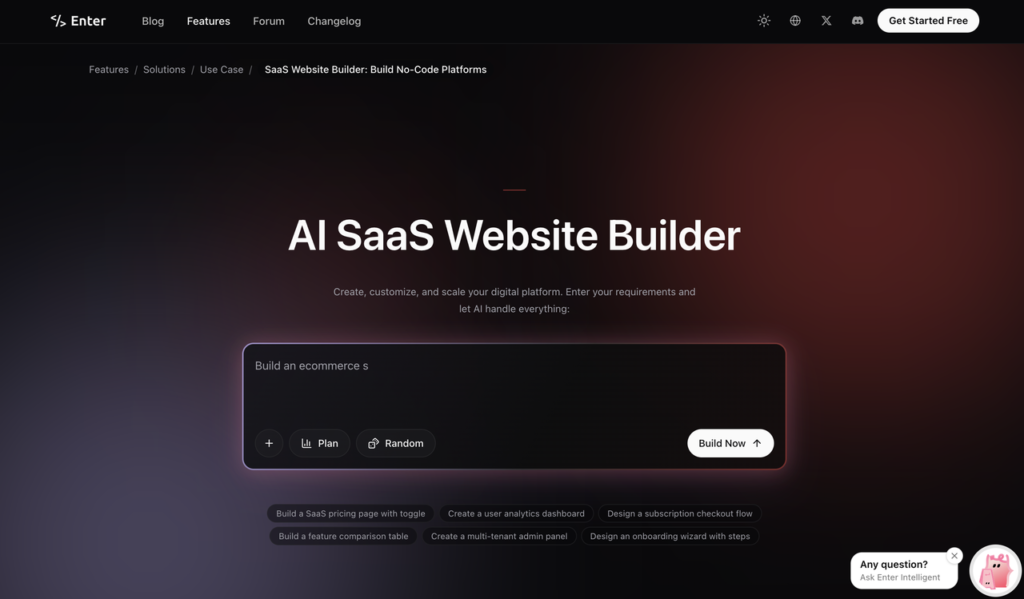
The platform infrastructure that supports this speed matters significantly. A SaaS website builder that handles authentication, billing, and the marketing site simultaneously rather than requiring each to be built separately removes weeks from the time between validated idea and launched product. For an indie hacker whose competitive advantage is speed, those weeks are not a minor convenience. They are the difference between being first in a niche and arriving after someone else has already established themselves.
Enter Pro gives indie builders enough flexibility to build something that looks and functions like a properly built product from the first day it is live rather than the kind of rough MVP that signals to potential users that this might not be something worth trusting with their workflow or their payment information.
The Revenue Milestone That Changes Everything
There is a specific revenue milestone that every indie hacker talks about with a significance that is disproportionate to the actual dollar amount. The first dollar of revenue. Not because a single dollar changes anyone’s financial situation, but because it changes everything about how the builder relates to what they are building.
Before the first dollar, a product is a project. Something the builder made might become a business if enough people decide it is worth paying for. After the first dollar, the product is a business. Someone other than the builder has decided that what was built is worth paying for and that external validation changes the psychological relationship with the work in ways that directly affect how persistently the builder continues to develop and improve it.
The indie hackers who make it to meaningful revenue are disproportionately the ones who got to that first dollar quickly, who treated early revenue as a validation signal worth optimizing for rather than a premature commercialization of something that was not yet ready. Enter Pro supports this approach by making the commercial infrastructure fast enough to set up that charging for access can happen before the product has every feature the founder eventually wants it to have.
Building Multiple Products Without Multiple Teams
One of the most interesting evolutions in indie hacking over the last several years is the emergence of the portfolio approach, building and maintaining multiple small products rather than betting everything on a single product that needs to grow into a large business to be considered successful.
The portfolio approach changes the risk profile of indie building significantly. A single product that fails to find its market is a failure. A portfolio of five products where two fail, two generate modest sustainable revenue, and one finds genuine traction is a successful indie business. The diversification that is conventional wisdom in investment is equally sensible applied to indie product development and the tools that make building faster make the portfolio approach practically achievable in a way that it was not when each product required months of development before it could be tested.
The indie hacker running a portfolio of products is managing a different set of challenges from the one focused on a single product. Attention is split, development time is shared, and the temptation to over-invest in the product showing the most traction at the expense of others requires active management. But the floor on financial outcomes is meaningfully higher and the learning that comes from running multiple products simultaneously compounds faster than learning from running one.
The Community That Replaces the Team
Indie hackers building alone face a challenge that is as psychological as it is practical. The absence of colleagues to think through problems with, to celebrate wins with, to provide the external perspective that reveals blind spots in how the builder is thinking about their product or their market, is a genuine disadvantage compared to building within a team.
The indie hacker communities that have developed around this way of working are one of the most effective responses to this challenge that the independent building ecosystem has produced. Forums, Slack groups, Discord servers, and the broader online conversation around indie building provide peer accountability, shared learning, and the genuine celebration of each other’s progress that a team provides internally, distributed across a community of people who understand the specific experience of building independently in a way that most people in their personal and professional lives do not.
A website that connects a builder’s product to these communities, that participates in conversations where potential users are already gathering, and that positions the builder as a genuine contributor to the indie ecosystem rather than a vendor trying to extract value from it, creates distribution and credibility simultaneously in the channel where independent builders have always found their earliest and most valuable users.
Conclusion
Indie hacking has never been easier in the technical sense and has never been more competitive in the market sense. The tools that make buildings accessible to more people also make the category more crowded and the differentiation that makes a product worth choosing over the alternatives it competes with requires the same careful thinking about customer, problem, and value that it has always required regardless of how much faster the building itself has become. The indie hackers who are building successfully in this environment are the ones who understand that the tools are an accelerant for good product thinking rather than a replacement for it and who use the speed the tools provide to test, learn, and iterate faster rather than simply to ship more features to a market they never properly validated.